Special Consumer Report
The Epsom Salt Trick Didn’t Fail Because It Was Too Simple.
It failed because a temporary voltage jump can make a damaged battery look alive without restoring the usable power you actually need.
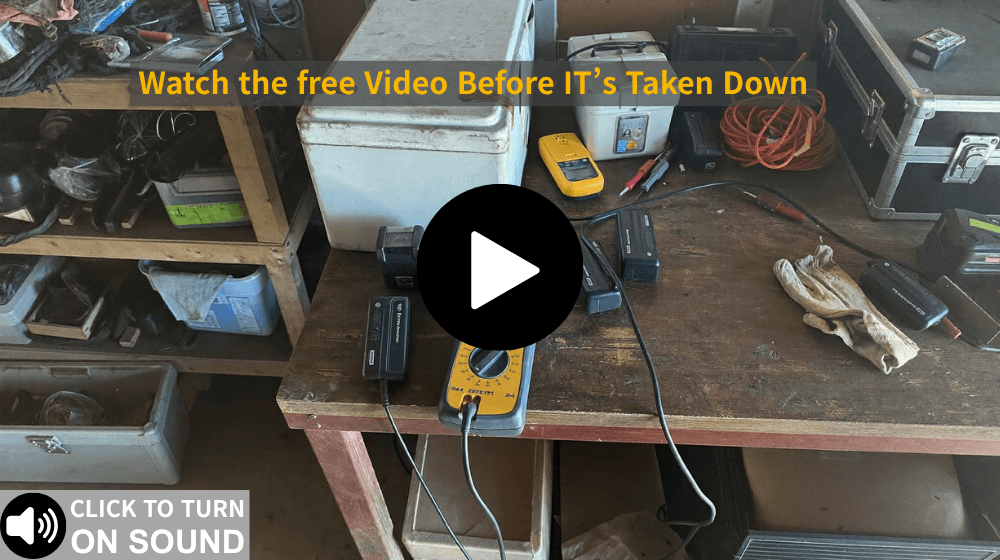
If you have an old car battery your charger refuses to recognize, a bucket of dead drill batteries gathering dust in the garage, or a marine battery that suddenly dropped below 10 volts, do not throw it away yet.
Some batteries really are finished. But others may be getting replaced before anyone has properly identified why they stopped accepting a charge. And that mistake becomes expensive.
Most Battery Revival Advice Asks the Wrong Question
Most internet tutorials focus on one thing: “Can we make the voltage reading go up?”
That is why tricks involving salt, homemade chemical mixtures and improvised chargers can appear to work at first. The meter moves. The battery accepts a small charge. For a few days—or sometimes a few weeks—it looks like the problem has been solved.
Then the battery weakens again. The charger rejects it. And you end up buying the replacement you were trying to avoid in the first place.
The real question is not whether you can make the number on a meter rise. It is whether the battery can deliver usable power again.
A Battery Can Look Alive and Still Be Practically Useless
A temporary improvement creates confidence before it creates reliability. You believe the battery has been restored. You reinstall it. You begin depending on it again.
Then the same cycle starts again:
The battery fails when a real load is connected.
The charger rejects it again a few days or weeks later.
You return to the store and buy the replacement anyway.
The old battery gets thrown away without a proper diagnosis.
One replacement may not feel serious. But the same cycle repeated across a truck, mower, boat, tools, electronics and backup equipment quietly drains money over time.
“Dead” Is Often a Label, Not a Diagnosis
A charger refusing a battery does not automatically explain why the battery failed. A more practical process begins by separating three different questions.

Identify
Why did the battery stop accepting a normal charge? Low voltage, imbalance, sulfation—or irreversible damage?

Decide
Is it actually a reasonable recovery candidate? Not every battery should be revived.

Verify
Does it deliver practical power after the process? A higher voltage reading by itself is not enough.
| What Many Tutorials Show | What Actually Matters |
|---|---|
| A quick increase on the meter | Whether the battery delivers usable power under load |
| One universal trick for every battery | A condition-specific diagnosis and process |
| “It took a charge” | Whether usable capacity remains afterward |
Recovering One Battery Can Avoid a Replacement. Recovering Several Creates a Different Possibility.
Most battery tutorials stop after getting one battery to accept a charge. But that is only the first half of the idea introduced in The Last Battery presentation.
What Could Several Usable Batteries Do Together?
One Battery
Limited storage
Several Usable Batteries
More combined storage
Watt Stacking
Selected backup-power applications
One battery may support a light, phone charger or small device. Several usable batteries, arranged correctly, may function as a larger storage bank for selected essential loads.
This is not: electricity from nothing, a spinning-magnet generator, or a “free energy” promise. It is a storage-and-recovery concept that starts with understanding the battery’s actual condition.
The Part Most Free Tutorials Never Explain
How to separate a possible recovery candidate from a dangerous battery
Why a voltage spike is not the same as restored usable capacity
Why different battery conditions may require different handling
How several usable batteries may fit into a larger backup plan
Which essential devices should be prioritized during an outage
The short presentation below begins with the batteries already sitting around one man’s home—and explains why recovering them became only the beginning of a larger backup-power strategy.
Watch The Battery Revival
Presentation Below
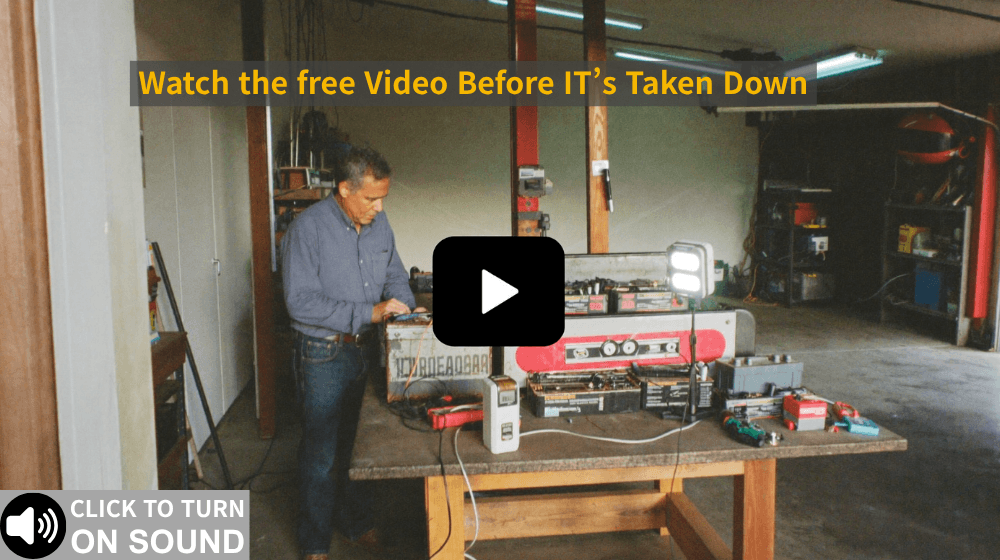
See the difference between temporarily raising voltage and recovering practical usable power.
Copyright © 2026 All Rights Reserved.
This site is not a part of the Facebook website or Facebook Inc.
Additionally, this site is NOT endorsed by Facebook in any way.
FACEBOOK is a trademark of FACEBOOK, Inc.
Create Your Free Account